


1. Summit the Yerevan Cascade for a view of Mount Ararat
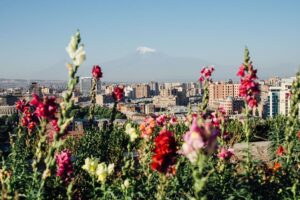
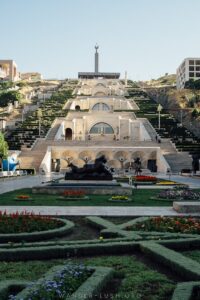
The Yerevan Cascade, a massive limestone staircase linking the lower and upper parts of the city, is one of the best spots in Armenia for stunning views of Yerevan and the twin peaks of Mount Ararat. Start at the Sculpture Garden at the bottom, where you’ll find provocative and humorous works by Colombian artist Fernando Botero, like ‘Smoking Woman’ and ‘Gatto’ (the cat).
You can either climb the outdoor stairs or take the escalators inside to the Cafesjian Museum of Art. As you ascend, you’ll pass Soviet-style stone reliefs, fountains, and sculptures that decorate each tier. Inside, you’ll find galleries showcasing various art exhibitions, with some galleries (like the Sasuntsi Davit Gallery) free to visit.
Once you reach the top, you’re treated to breathtaking views, especially on a clear day when Mount Ararat is visible. It’s best to visit early in the morning to avoid haze, especially in the summer. The fountains aren’t on until mid-morning, so plan accordingly. For a different experience, try visiting at sunset in the spring or winter for a clear view of Ararat.
2. Keep on climbing to the October Revolution Memorial
The views from the top of the Cascade are incredible, but if you’re up for more exploration, you can climb higher to the October Revolution Memorial, Victory Park, and the Mother Armenia statue in Kanaker-Zeytun district, just 20-30 minutes on foot from the Cascade.
From the top of the Cascade, take the path on the left-hand side and you’ll soon see the inner workings of the Cascade itself, which is quite fascinating. Continue walking, following the lemon-colored wall next to the construction site, until you’re standing beneath the concrete structure. Use the metal stairs by the guard box to reach the top and you’ll emerge inside the memorial complex.
From here, you can get a great photo of the obelisk and stairs framed by the concrete overhang. The October Revolution Memorial features a massive concrete plaza with grand views, a mausoleum-like stone building, and a towering 50-meter obelisk crowned with a wheat sheaf symbolizing the Tree of Life. Created in 1967 by Jim Torosyan and Sargis Gurzadyan, this memorial commemorates the 50th anniversary of the Bolshevik Revolution.
3. Walk through Victory Park & say ‘hello’barev’ to Mother Armenia
Victory Park, officially opened in November 1950 after two decades of construction, is one of Yerevan’s largest green spaces and offers the best panoramic views of the city. The park is filled with a retro vibe, complete with cute hand-drawn maps at every entrance. Inside, you’ll find various war memorials, stunning khachkar stones, and an amusement park with a ferris wheel and an artificial lake at the upper part.
If you’re coming from the Cascade via the October Revolution Memorial, exit from the back of the memorial plaza and take the pedestrian underpass to cross the road. You’ll find an entrance to Victory Park directly ahead. Once inside, follow the main walking path that will lead you past an abandoned restaurant, and eventually to a panoramic viewpoint, the Tomb of the Unknown Soldier, the eternal flame, and the iconic Mother Armenia statue.
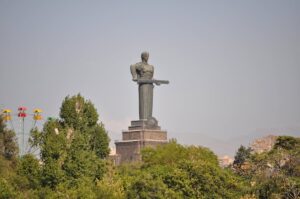
Mother Armenia, a 22-meter-high statue, was originally a Stalin statue but was replaced in 1962 with this powerful symbol of “peace through strength.” Designed by Ara Harutyunyan, it is reminiscent of similar statues found in former USSR cities, such as Tbilisi’s Mother of Georgia. The statue is modeled after Genya Muradian, a real woman, whose story is quite fascinating! The pedestal is unique in that it houses the Military Museum of Armenia, designed by Rafayel Israyelian, and entry to the museum is by donation.
4. Visit the mighty Matenadaran Museum of Ancient Manuscripts
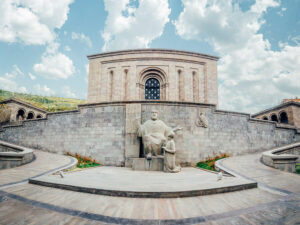
The Matenadaran, officially known as the Mesrop Mashtots Institute of Ancient Manuscripts, is located in an impressive building on the hillside behind the Cascade. To reach it, cross the footbridge near the Divers sculpture and follow the lower road.
This institute is home to the world’s largest collection of Armenian manuscripts. Established in 1959 and named after Mesrop Mashtots, the inventor of the Armenian alphabet, the Matenadaran houses around 23,000 manuscripts, scrolls, and over half a million archival documents, decrees, and periodicals. Many of these valuable pieces were generously donated by the public.
Inside, a small portion of the collection is displayed in stately rooms, with manuscripts presented in antique wooden cabinets under glass. The illuminated manuscripts are especially striking, and it’s fascinating to view early examples of the Armenian alphabet. One of the highlights of the collection is a copy of Urbatagirk, the first Armenian book published in Venice in 1512.
5. Grab a drink at Lumen 1936, Yerevan’s most beautiful coffee shop
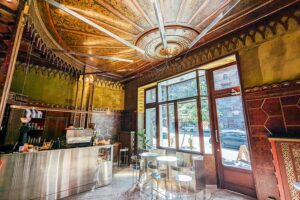
Lumen Coffee 1936, conveniently located near the bottom of the Cascade, is a perfect stop for breakfast or a refreshing drink after your morning walk.
Originally opening in 1940 as a tobacconist and bookstore, the space maintains its historical charm with original painted walls, inlay ceilings, and woodwork crafted by master craftsman Hovhannes Naghashyan.
The cafe features cozy little booths for solo visitors and a couple of tables for others. The coffee is excellent, and although I arrived before the kitchen opened, I could still enjoy a delicious croissant. The historic details, combined with the morning sunlight streaming through the windows, make this one of the most beautiful spots in Yerevan.
6. Hunt down Yerevan street art
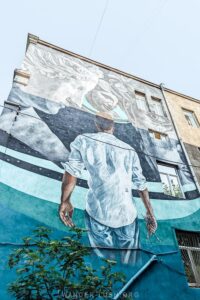
In early 2023, Yerevan hosted its first street art festival, the City of the Future Street Art Festival. The event featured several large-scale murals, including a stunning piece by Italian artist Antonio Perrotta (attorrep), which adorns the facade of the Academy of Fine Arts near Lumen Cafe.
As you explore Yerevan, you can spot at least three more murals created as part of the festival—see how many you can find during your visit!
Just around the corner, another public art project is worth checking out: the ‘Eternal Alphabet Wall,’ which showcases sculptures of characters from the Armenian alphabet, created by artist and designer Vahan Balasanyan.
7. Stroll through Republic Square
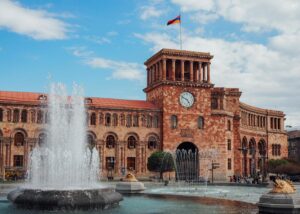
Republic Square, the heart of Yerevan, is surrounded by impressive buildings, including the National Museum. Originally called Lenin Square, it was a military parade ground but now serves as a lively gathering spot. With 300 days of sunshine a year, it’s perfect for enjoying a coffee or ice cream. In the evening, the Dancing Fountain lights up.
The History Museum at the top of the square houses over 400,000 items, including the 5,500-year-old Areni-1 shoe, the oldest leather shoe in the world. It’s a must-visit for those interested in Armenia’s rich history and winemaking tradition.
8. Step inside Katoghike, Yerevan’s most beautiful church
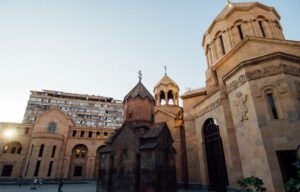
Katoghike Holy Mother of God Church, consecrated in 1264, is one of Yerevan’s oldest churches. The complex has grown over the years, with a tiny 13th-century chapel now surrounded by a larger basilica. Despite enduring Soviet-era city planning and earthquakes, parts of the church, including its original wall, remain intact. The church has a special atmosphere, especially at sunset when the light highlights the stone and bell tower.
9. Visit the Blue Mosque, the last active mosque in Armenia
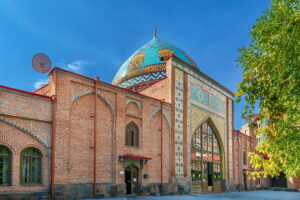
The Blue Mosque, built in the 18th century, is Yerevan’s largest and last remaining mosque, mostly used by the Iranian community. Its beautifully restored turquoise, indigo, and yellow mosaics, along with the elaborately decorated entrance, are key highlights. The mosque, also a cultural center, offers Farsi classes. Visitors can explore the garden and, when prayers aren’t in session, the interior with its stunning brick dome and tile work. Appropriate dress is required. The mosque symbolizes the strong relationship between Armenia and Iran.
10. Watch the weavers in action at the Megerian Carpet Museum
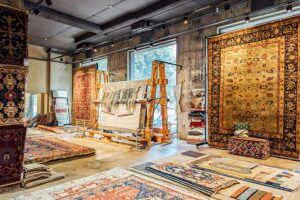
The Megerian Carpet Museum, a bit outside the city center, is a must-see for textile enthusiasts. This private shop-museum showcases a vast collection of Armenian and Caucasian rugs, both antique and newly woven. Visitors can watch live weaving and dyeing demos. It’s a great place to purchase authentic or replica hand-woven carpets. If you’re short on time, a smaller, free version is located in the Tufenkian Heritage Hotel near Vernissage Market.